Major, Minor & Exotic Currency Pairs: What's the Difference?
Published on July 22, 2026
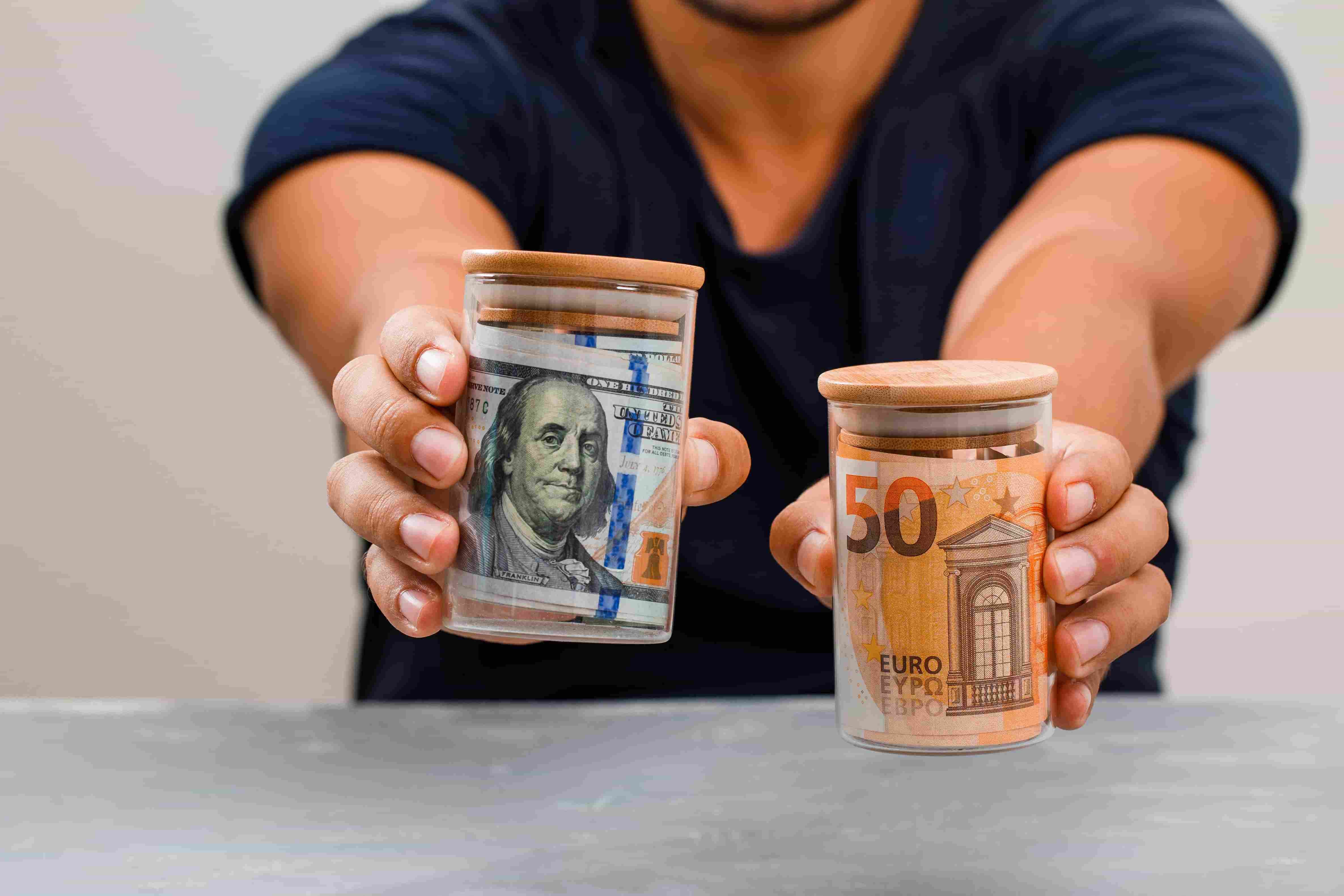
There are roughly 2,500 currency pairs you could theoretically trade in the forex market. In practice, most experienced traders focus on fewer than ten. The reason is simple: not all currency pairs are built the same. They differ in liquidity, trading cost, volatility, and the kind of knowledge you need to trade them well.
Understanding the difference between major, minor, and exotic currency pairs is not an introductory technicality you skim and move on from. It directly determines your trading costs, your risk exposure, and how easy it is to enter and exit trades without getting punished by the market.
Here is everything you need to know, built around the most current data available.
21.2% EUR/USD share of global daily forex volume — BIS 2025 EUR/USD share of global daily forex volume — BIS 2025
$9.6T Total daily forex market volume — BIS Triennial Survey 2025 Total daily forex market volume — BIS Triennial Survey 2025
2,500+ Estimated tradeable currency pairs globallyEstimated tradeable currency pairs globally
What Is a Currency Pair?
Every forex trade involves two currencies simultaneously. You buy one while selling the other. That combination is the currency pair.
The currency on the left is called the base currency. The currency on the right is called the quote currency. The price of the pair tells you how much of the quote currency you need to buy one unit of the base.
So when EUR/USD is priced at 1.1200, it means one euro currently buys 1.12 US dollars. If you believe the euro will strengthen, you buy the pair. If you believe the dollar will strengthen, you sell it.
Every single forex trade you ever place works exactly like this, regardless of which pair you choose. What changes across major, minor, and exotic pairs is how much it costs you to trade, how predictable the price movements are, and how much market depth exists to support your position size.
Major Currency Pairs
Major pairs are the seven most traded currency pairs in the world. Every single one of them includes the US dollar on one side. The dollar's dominance here is not arbitrary: it is the world's primary reserve currency, used in the majority of global trade transactions and held in virtually every central bank's reserves.
EUR/USD | USD/JPY | GBP/USD | USD/CHF | USD/CAD | AUD/USD | NZD/USD |
Together, major pairs account for approximately 75% of all daily forex trading volume globally. They have the tightest spreads, the deepest liquidity, and the most analyst coverage of any pairs in the market.
EUR/USD: The King of Forex
EUR/USD is the most traded currency pair on earth. According to BIS 2025 Triennial Survey data, it accounts for 21.2% of all daily global forex turnover. On a $9.6 trillion daily market, that is more than $2 trillion traded in EUR/USD alone every single day.
The pair is driven primarily by decisions from the European Central Bank and the US Federal Reserve. In 2025 to 2026, EUR/USD has been trading in the 1.14 to 1.20 range, driven by ECB rate expectations and sustained dollar weakness. Spreads on EUR/USD with most regulated brokers sit at 0.1 to 0.3 pips. For context, some exotic pairs carry spreads above 50 pips. This difference in cost is enormous when compounded across hundreds of trades.
USD/JPY: The Second Most Traded Pair
USD/JPY holds 14.3% of global turnover according to BIS 2025, up from 13.5% in 2022. The Bank of Japan's historically ultra-loose monetary policy made the yen one of the most popular funding currencies for carry trades globally. In 2025, as the BoJ shifted toward rate normalisation, USD/JPY experienced significant volatility that created major opportunities for traders who understood the underlying dynamic.
The remaining major pairs — GBP/USD, USD/CHF, USD/CAD, AUD/USD, NZD/USD — all carry similar characteristics: tight spreads, high liquidity, and predictable responses to economic data.
"Major pairs are where you learn to trade properly. The liquidity means your analysis has a fair chance to play out. In exotic pairs, a single large order can move the market against you regardless of how right you are technically." — Kathy Lien, Managing Director of FX Strategy at BK Asset Management, author of Day Trading and Swing Trading the Currency Market
Minor Currency Pairs (Cross Pairs)
Minor pairs, also called cross pairs, are currency pairs that include two major currencies but do not include the US dollar. The absence of USD is the defining feature. These pairs still carry solid liquidity and are actively traded by professional and retail traders alike.
EUR/GBP | EUR/JPY | GBP/JPY | AUD/JPY | EUR/AUD | CAD/JPY |
The most traded minor pairs are the ones involving the euro, British pound, or Japanese yen because these currencies are the most active outside of the USD. GBP/JPY in particular is known for large intraday moves and is a favourite among traders who want higher volatility within a liquid market.
Spreads on minor pairs are wider than majors but narrower than exotics, typically sitting between 0.5 and 3 pips depending on the pair and the session. EUR/GBP, the most liquid cross, often trades with spreads comparable to the less popular major pairs.
Why Trade Minor Pairs?
Minor pairs give you exposure to currency dynamics that do not involve the US dollar directly. If you have a view on the relative strength of the euro versus the pound based on ECB and Bank of England policy divergence, EUR/GBP lets you express that view without USD interference. For traders who follow European economic data closely, cross pairs can provide cleaner, more direct signals than equivalent dollar pairs.
Exotic Currency Pairs
Exotic pairs combine one major currency with the currency of an emerging or smaller economy. These are the least traded pairs in forex, and they come with a completely different risk and cost profile compared to majors and minors.
USD/INR | USD/TRY | USD/ZAR | USD/MXN | USD/SGD | USD/BRL |
The spread difference between exotic and major pairs is stark. According to 2025 research, spreads on major pairs sit below 0.01% while exotic pairs can carry spreads of 1 to 3%. On a $10,000 position, that difference could mean paying anywhere from $1 to $300 in trading cost on a single transaction. That is not a minor distinction. That is the difference between a trade that starts profitable and one that needs a significant move just to break even.
USD/INR: The Pair Every Indian Trader Should Understand
For traders in India, USD/INR is a natural starting point of interest. The pair reflects the relationship between the world's dominant reserve currency and one of the world's fastest-growing major economies. The Reserve Bank of India actively manages INR volatility, which means USD/INR does not always move as freely as pure market forces would suggest. RBI interventions can cap or floor moves, creating a different trading dynamic than fully free-floating pairs.
What Makes Exotics Risky?
Exotic pairs have three characteristics that make them genuinely harder to trade profitably. First, the wide spreads mean you are already down significantly before price moves in your favour. Second, liquidity is thin, which means larger orders can move the price against you during execution. Third, the economies behind exotic currencies can be subject to political risk, capital controls, and sudden central bank intervention in ways that major currency economies are not. They are not untradeable. Experienced traders with deep knowledge of a specific emerging market economy can find genuine edge in exotic pairs. But for anyone building their trading foundation, starting with exotics adds unnecessary cost and complexity.
Major vs Minor vs Exotic: Side by Side
Major Pairs
- Major pairs always include the USD.
- They have the highest liquidity in the Forex market.
- Typical spreads range from 0.1 to 1 pip.
- Volatility is moderate and more predictable compared to other pairs.
- Suitable for all timeframes.
- Receive extensive analyst and media coverage.
- Best choice for beginners.
- Examples: EUR/USD, USD/JPY.
Minor Pairs
- Minor pairs do not include the USD.
- They have medium liquidity.
- Typical spreads range from 1 to 5 pips.
- Volatility is moderate to high.
- Best traded on H1 and higher timeframes.
- Analyst coverage is good but lower than major pairs.
- Suitable for traders with some experience.
- Examples: EUR/GBP, GBP/JPY.
Exotic Pairs
- Exotic pairs include one major currency and one currency from an emerging economy.
- They have the lowest liquidity.
- Typical spreads range from 5 to 50+ pips.
- Volatility is very high and less predictable.
- Daily timeframe (D1) is generally recommended.
- Analyst coverage is limited.
- Not recommended for beginners.
- Examples: USD/TRY, USD/ZAR.
The 2025 Trend That Is Changing the Map
The composition of forex trading is shifting. According to BIS 2025 data, while major pairs still dominate, emerging market currencies are gaining share at a pace not seen in previous surveys.
USD/CNY — the US dollar versus the Chinese yuan — has grown from just 0.8% of global forex turnover in 2010 to 8.1% in 2025. That is a 912% increase in 15 years. The yuan's rising share reflects China's growing role in global trade finance and Beijing's gradual internationalisation of its currency.
Justin Grossbard, co-founder of CompareForexBrokers, summarised the shift directly:
"Major pairs still set the benchmark for pricing, but rising volumes in minor and emerging markets have resulted in a significant shift in trading patterns."
What this means practically is that certain pairs once considered exotic, particularly those involving Asian currencies, are becoming progressively more liquid as institutional participation grows. USD/CNY, USD/SGD, and USD/HKD are trading with narrower spreads today than they did five years ago and are increasingly accessible to retail traders through platforms like MT5.
This is not a reason to chase exotics prematurely. But it is worth knowing that the landscape is changing, and the category boundaries between minor and exotic are becoming less rigid over time.
"USD/CNY is the clearest example of this shift. It has grown from just 0.8% of global turnover in 2010 to 8.1% in 2025. It paints a clear picture of the yuan's growing role in global trade and finance, and how Asia has become increasingly central to foreign exchange markets." — Justin Grossbard, Co-Founder of CompareForexBrokers, commenting on BIS 2025 Triennial Survey data
Which Currency Pairs Should You Actually Trade?
The honest answer depends on where you are in your trading journey. Here is a straightforward framework rather than a generic one-size recommendation.
If you are new to forex:
Start with EUR/USD. It has the tightest spreads, the most available analysis, the cleanest chart patterns, and the most predictable response to economic data of any pair in the market. Spend the first three to six months of your learning on this pair alone.
If you have six to twelve months of experience:
Add USD/JPY and GBP/USD. These two complete the core trio of major pairs. USD/JPY adds Asian session exposure and is highly sensitive to Bank of Japan policy. GBP/USD adds UK economic data sensitivity and typically produces larger intraday ranges than EUR/USD.
If you want to diversify beyond USD:
EUR/JPY and GBP/JPY are the most actively traded and most liquid minor pairs. EUR/JPY in particular is a strong addition for traders who follow both ECB and BoJ communications.
If you have specific expertise in an emerging market:
Only then consider exotic pairs. The prerequisite is genuine knowledge of the political and economic drivers of that specific country's currency, not just technical analysis skills.
One practical rule that holds across all experience levels: never let spread cost consume more than 10% of your target profit on a trade. If your target is 20 pips and the spread is 15 pips, the trade is structurally unprofitable before you even get started. This rule alone will keep you away from exotic pairs until your trading size and skill level justify the cost.
RISK DISCLAIMER
CFDs are complex instruments and carry a high risk of losing money rapidly due to leverage. A significant proportion of retail investor accounts lose money when trading CFDs. You should carefully consider whether you understand how CFDs work and whether you can afford to take the high risk of losing your money. All spread, volume, and market share figures cited in this article are sourced from the Bank for International Settlements 2025 Triennial Central Bank Survey and publicly available broker research. This content is for informational and educational purposes only and does not constitute financial advice or a trading recommendation.
Find Your
Trading Paradise
Start trading with clarity, confidence, and control.