What Is Forex Trading? A Beginner's Complete Guide
Published on July 22, 2026
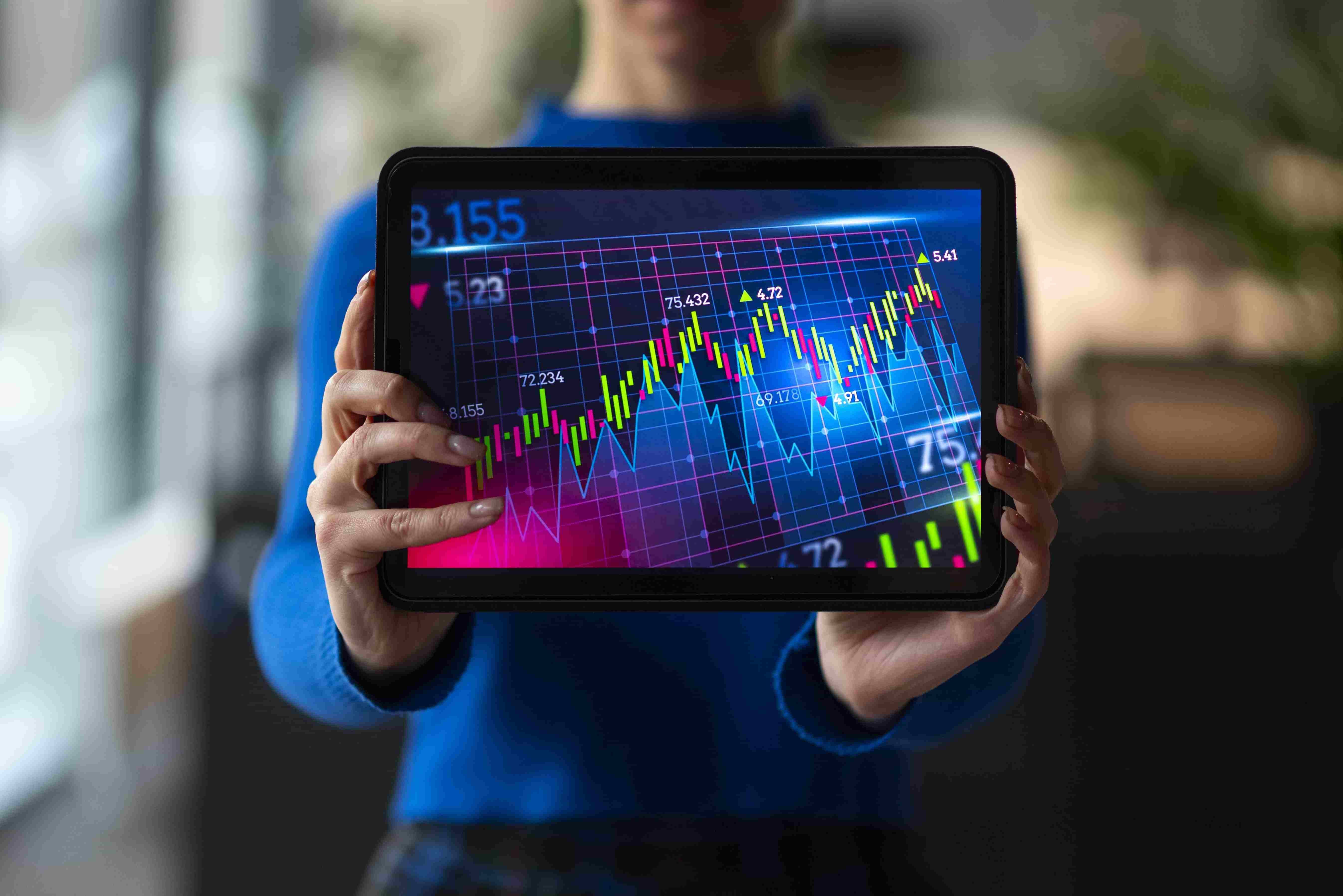
Every day, $9.6 trillion changes hands in the forex market. That number is not a typo. It is the daily trading volume recorded by the Bank for International Settlements in its 2025 Triennial Survey. To put it into perspective, the entire New York Stock Exchange trades around $20 billion a day. The forex market is 480 times bigger.
And yet most people have no idea what forex trading actually is.
If you have ever exchanged rupees for dirhams before a trip, or checked why the dollar got stronger after a US jobs report, you have already touched the edges of this market. Forex trading is simply the act of buying one currency while selling another, with the goal of making a profit from the change in their relative value.
This guide will show you exactly how it works, who is doing it, and what you need to understand before you place your first trade.
$9.6 Trillion Average daily forex trading volume — BIS Triennial Survey, April 2025Average daily forex trading volume — BIS Triennial Survey, April 2025
What Is Forex Trading, Exactly?
Forex stands for foreign exchange. The forex market is where the world's currencies are bought and sold against each other, 24 hours a day, five days a week.
When you trade forex, you are always dealing with a currency pair. For example, EUR/USD is the euro paired against the US dollar. If you believe the euro will strengthen against the dollar, you buy EUR/USD. If the euro rises and you close your trade at a higher price, you make a profit. If it falls, you take a loss.
That is the core concept. The complexity comes in understanding what moves these prices and how to read the market well enough to trade it profitably.
Unlike the stock market, there is no physical exchange, no central building where trades happen. Forex is an over the counter (OTC) market, which means it runs entirely through a global network of banks, brokers, and electronic platforms. This is why it never closes during the trading week. When New York winds down, Tokyo is opening. When Tokyo closes, London is starting its session.
How Does the Forex Market Actually Work?
Forex prices move because of supply and demand. When more people want to buy a currency, its price goes up. When more people want to sell, it drops. The question is: what creates that demand?
The short answer is everything. Economic data, interest rates, political events, trade flows, inflation numbers and even natural disasters can shift how much a currency is worth. When the US Federal Reserve raises interest rates, the dollar often strengthens because higher rates attract foreign capital. When a country faces political instability, its currency typically weakens.
This is what makes forex both challenging and endlessly interesting. You are not just reading a chart. You are reading the world.
The Four Main Trading Sessions
The forex market runs across four major sessions each day: Sydney, Tokyo, London, and New York. The busiest period is the London and New York overlap between 1pm and 5pm UTC, when both markets are open simultaneously. This is when liquidity is highest and price movements are most significant.
"The forex market is the most democratic market in the world. It does not discriminate based on who you are or where you come from. It only cares about whether you are right or wrong about price direction." — Kathy Lien, Managing Director of FX Strategy at BK Asset Management
Who Actually Trades Forex?
When people think of forex trading, they picture individual traders at home on a laptop. But retail traders make up only about 2.5% of the total market, according to BIS 2025 data. The rest is dominated by much larger players.
- Central Banks (~10%) – Manage national currency value and control monetary policy.
- Commercial Banks (~46%) – Handle trades for clients and also trade to generate profits.
- Hedge Funds & Institutions (~41%) – Take large speculative positions to earn investment returns.
- Retail Traders (~2.5%) – Individual traders who trade using online platforms such as MT5.
The fact that retail traders are a small share of the market does not mean there is no opportunity. It means you are trading a market with enormous liquidity, tight spreads, and price movements driven by genuinely significant global forces. That is actually a good thing.
Understanding Currency Pairs
Every forex trade involves two currencies. The first currency in the pair is called the base currency and the second is the quote currency. The price tells you how much of the quote currency you need to buy one unit of the base.
For example, if EUR/USD is trading at 1.0850, it means 1 euro buys 1.0850 US dollars.
Currency pairs are grouped into three categories:
- Major Pairs: The most traded pairs in the world, all involving the US dollar. Examples: EUR/USD, GBP/USD, USD/JPY, USD/CHF. EUR/USD alone accounts for 21.2% of all daily forex trading.
- Minor Pairs: Currency pairs that do not include the US dollar but involve other major currencies. Examples: EUR/GBP, AUD/JPY, GBP/CAD.
- Exotic Pairs: One major currency paired with the currency of a smaller or emerging economy. Examples: USD/INR, USD/TRY, EUR/SGD. These pairs have wider spreads and less liquidity.
For beginners, major pairs are the best starting point. They have the tightest spreads, the highest liquidity, and the most analysis and educational content available.
How Do Forex Traders Actually Make Money?
Traders make money from the difference between the entry and exit price of a trade. If you buy EUR/USD at 1.0850 and sell it at 1.0920, you have made 70 pips of profit. A pip is the smallest standard price movement in a currency pair, typically 0.0001 for most pairs.
Most retail forex trading happens through CFDs, which stands for Contracts for Difference. With CFDs, you do not physically buy the underlying currency. You speculate on the price movement. This allows you to go long (profit if the price rises) or go short (profit if the price falls), giving you trading opportunities in both rising and falling markets.
Most brokers also offer leverage, which means you can control a larger position with a smaller amount of capital. For example, with 1:100 leverage, you control 100,000 units of currency with just 1,000 in your account. This amplifies both potential profits and potential losses.
"Leverage is a double-edged sword. It is the feature that makes forex accessible to retail traders, but it is also what destroys undisciplined accounts faster than any market move ever could." — Mark Douglas, Author of Trading in the Zone
A Real Trade Example (Step by Step)
Let us say you are following the news and you notice the US Federal Reserve has signalled that it will cut interest rates later this year. Historically, rate cuts tend to weaken the dollar.
You decide to trade EUR/USD, buying euros and selling dollars.
Your Trade Setup
- Entry Price: EUR/USD at 1.0820 (you buy 1 standard lot = 100,000 EUR)
- Stop Loss: 1.0770 (50 pips below entry — your maximum risk)
- Take Profit: 1.0970 (150 pips above entry — your target)
- Leverage Used: 1:50 (you need $2,164 in margin to hold this position)
The dollar weakens as expected. EUR/USD moves up to 1.0970. You close the trade and bank 150 pips of profit. On a standard lot, that works out to approximately $1,500 in profit.
Now, the opposite is also possible. If the dollar strengthens and EUR/USD drops to your stop loss at 1.0770, you lose approximately $500. That is why your stop loss protects you, and why risk management is the most important skill in trading.
The Risks You Need to Know Before You Start
Forex trading is not passive income. It is not a get rich quick scheme. The majority of retail traders lose money, and the reasons are almost always the same: overleveraging, trading without a plan, and letting emotions drive decisions.
The risks you need to take seriously are:
- Leverage risk: The same leverage that magnifies profits will magnify losses. A 2% move against you on a 1:100 leveraged position wipes out your entire account.
- Volatility risk: Major news events like US Non Farm Payroll data or central bank decisions can cause prices to move 100 pips in seconds. Without proper stop losses, this can be devastating.
- Emotional risk: Fear and greed are the two biggest killers of trading accounts. Many traders abandon their strategy when trades go against them or overtrade after a winning streak.
- Platform and broker risk: Choosing an unregulated broker is one of the fastest ways to lose your capital. Always verify that your broker operates under a legitimate regulatory framework.
None of these risks make forex untradeable. They make it something that requires education, preparation and discipline before you risk real money.
How to Start Forex Trading in 2026?
The good news is that starting has never been more accessible. Here is the honest path:
- Open a demo account first: Every serious broker offers a free demo account with virtual money. This is where you learn the platform, test strategies and understand how trades work without any financial risk. Spend at least 4 to 8 weeks here before touching real capital.
- Learn the basics before you trade: Understand what moves currency prices, how to read a chart, what a moving average does and how to set a stop loss. These are not advanced topics. They are the minimum required knowledge.
- Choose a regulated broker: Look for a broker that offers transparent trading conditions, a well supported platform like MT5, and proper regulatory standing. Your money needs to be with a firm that can be held accountable.
- Start small when you go live: Your first real account should be funded with money you can afford to lose. This is not pessimism. It is how every professional trader started.
- Keep a trading journal: Write down every trade you take, why you took it, what happened and what you learned. This is the single most underrated habit in trading.
"The goal of a successful trader is to make the best trades. Money is secondary. If you are doing the right things, the money follows." — Alexander Elder, Author of Trading for a Living
Is Forex Trading Right for You?
Forex trading suits people who are genuinely curious about global markets, willing to put in the learning time, and disciplined enough to follow a plan under pressure. It does not suit people who are looking for a quick fix or who cannot stomach the idea of losing money on individual trades.
The traders who succeed over the long term are not the ones who never lose. They are the ones who lose small, win consistently, and protect their capital above everything else.
In 2026, the tools available to retail traders are better than they have ever been. Real time data, institutional grade charting on MT5, copy trading, automated strategies, and access to global markets from a single account have made it possible for anyone to participate in this market with the right preparation.
The market itself is not the obstacle. Preparation is.
Start with a Demo. Learn Before You Risk.
You now understand what forex trading is, how the market works, who the players are, and what it actually takes to make a trade. The next step is to experience it firsthand.
At Paradise Global Markets, we offer a free demo account on MT5 where you can practice forex trading in a live market environment with zero risk. No pressure, no commitment. Just you and the market, until you are ready.
Open Your Free Demo Account at Paradise Global Markets
paradiseglobalfx.com | MT5 Platform
RISK DISCLAIMER
CFDs are complex instruments and carry a high risk of losing money rapidly due to leverage. A significant proportion of retail investor accounts lose money when trading CFDs. You should carefully consider whether you understand how CFDs work and whether you can afford to take the high risk of losing your money. Forex trading and CFD trading involve significant risk and are not appropriate for all investors. Past performance is not indicative of future results. All examples in this article are illustrative only and do not represent guaranteed outcomes. This content is for informational and educational purposes only and does not constitute financial advice. Seek independent financial advice if needed. Paradise Global Markets operates under its regulatory framework
Find Your
Trading Paradise
Start trading with clarity, confidence, and control.